Résumé

Projects

Things I build for fun

No customers and no deadlines, just things I wanted to exist.

Public on GitHub

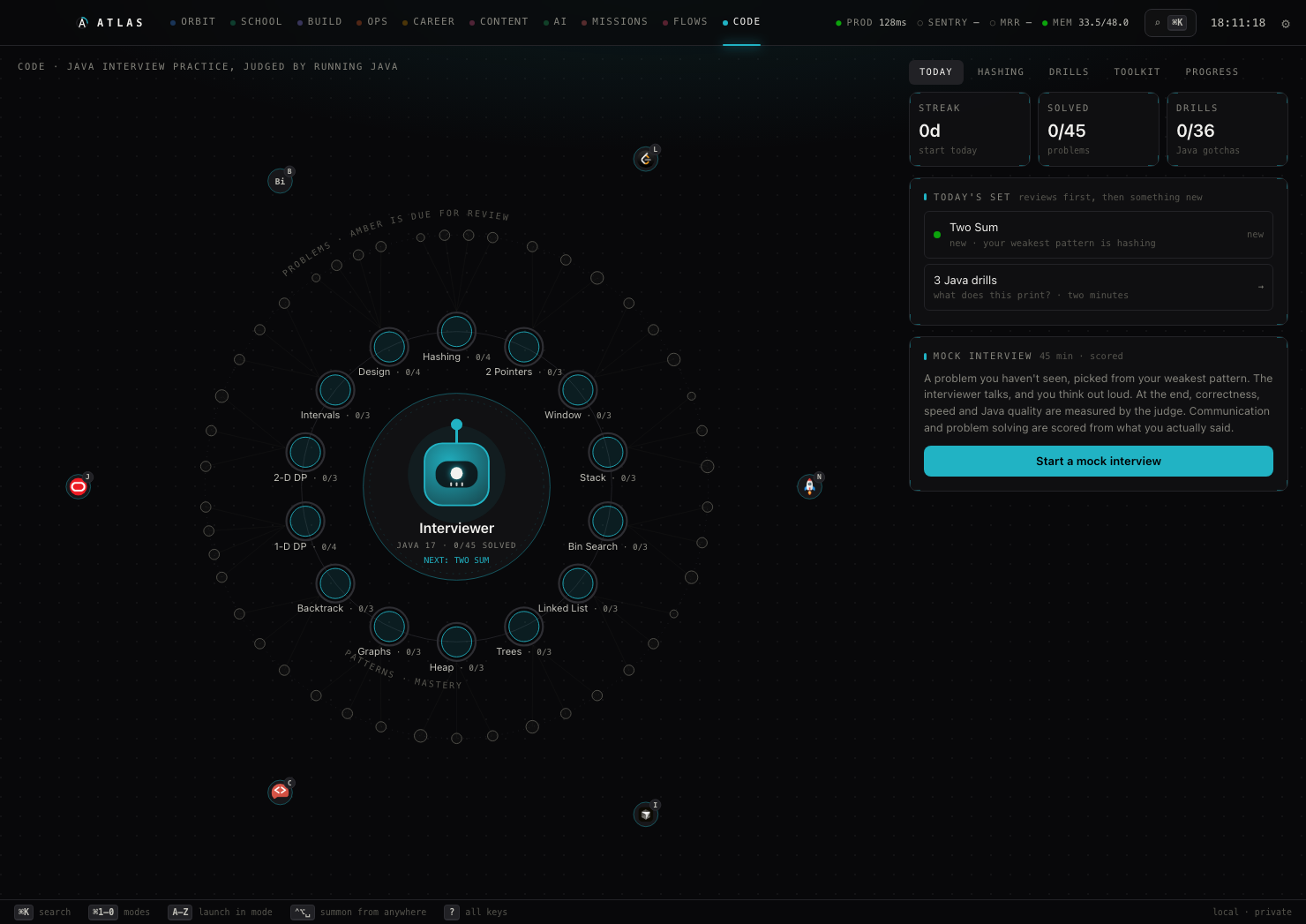
Atlas

My own AI command center, running entirely on my Mac.

Atlas reads through my class folders, my code and my notes so I can ask things like "what's due this week?" The models run locally with Ollama, so nothing leaves my laptop.

Building it taught me that small models are bad at deciding what to read but pretty good at reasoning once you hand them the right files. So I moved the searching into regular code, and on my test set an 8B model went from 0 out of 7 to 7 out of 7. There's also a Java interview trainer that estimates your solution's Big-O by timing it as the input doubles.

  • Rust
  • Tauri
  • React
  • Ollama
  • Qwen3
Atlas, showing its Java interview practice screen


Hardware prototype

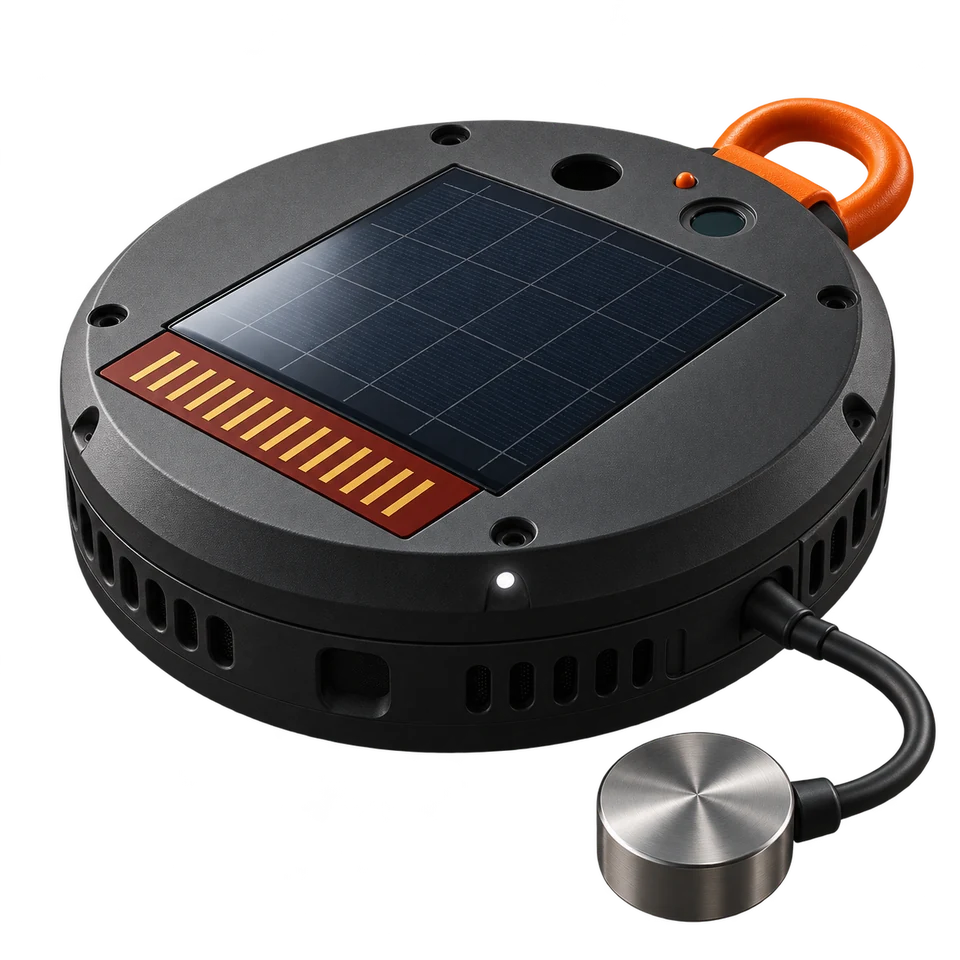
Rock Buddy

Know what the rock is doing before you make the drive.

I love climbing sandstone, but it's soft rock that weakens when it's wet, and winter conditions are hit or miss. Weather apps forecast for a whole town, not the one boulder sitting in the shade, so most winter trips were a guess.

Rock Buddy is a small solar-powered sensor that stays at the crag and measures the rock itself: surface temperature, humidity, light and moisture. You check the numbers before you leave and make the call yourself.

It's designed around an ESP32 and four sensors. I wrote the logging firmware in C++ and modeled the enclosure in Python with CadQuery. It's still a prototype, so the readings on this page are simulated.

  • ESP32-S3
  • C++
  • Python
  • CadQuery
Concept render of the Rock Buddy solar sensor puck with its rock-surface probe
Rock—
Humidity—
Light—
Wetness—

What's inside

ESP32-S3
The brain. Small, cheap, and it has Bluetooth and Wi-Fi built in.
SHT45
Air temperature and humidity.
VEML7700
Light, to tell whether the rock is getting sun.
DS18B20 probe
Sits on the rock and measures the surface itself, which is what actually matters.
Wetness board
Notices when the surface is wet.
Power
A 0.6 W solar panel, a solar charger chip and a 2000 mAh battery, so it can sit outside for weeks.

Java · public on GitHub

Harris ModPack

A Minecraft modpack for my friends, with a custom mod I wrote in Java.

Over winter break I put together 85 mods with a one-command install, so my friends could actually get it running. Then I wrote my own mod in Java: name any tamed dog Olly, after my dog, and he gets bigger, faster, and starts picking fights with cows.

  • Java
  • NeoForge
  • Gradle
  • Python
Olly, mob edition

Python · MLX · runs on my laptop

llm-lab

What happens if you switch off part of an AI model?

The model I run locally, Qwen3, is a stack of 36 layers. Each layer does two jobs. Attention looks back at the other words in the prompt to work out what relates to what. The MLP is where a lot of the model's stored knowledge seems to live. Both add their results onto a running total that gets passed up the stack, and the top of the stack reads that total to pick the next word.

The experiment: set one of those contributions to zero, so that piece still runs but can't add anything, then ask the exact same question again. I use greedy decoding, which means the model always picks its single most likely next word, so the normal answer comes out identical every time. If the answer changes, the piece I switched off caused it.

Do that for all 72 pieces and you get a rough map of what the model depends on. When I asked for the capital of Australia, switching off certain MLPs in layers 5 to 10 made the model confidently say Australia has no capital city, so that's roughly where the fact lives. Switching off the very first attention layer leaves it unable to see the prompt at all: it just says "The" over and over. Most later layers only change the wording.

It's a first look, not the full story: knocking out one piece at a time misses pieces that cover for each other. That's the next experiment.


  • Python
  • MLX
  • Qwen3-4B
  • Ollama

Loading the experiment…